Doing the Best V’s Doing Better

To me there seems to be two camps of thinking:

  1. “I did the best that I can do” and then try to deal with the guilt of not  being perfect
  2. “I can do better” and just simply accept that we are all mere mortals

I like number 2 but the majority seems to persist with number 1, in my view.

Posted in Agreements | Leave a comment

Timing is Everything

Untitled-11
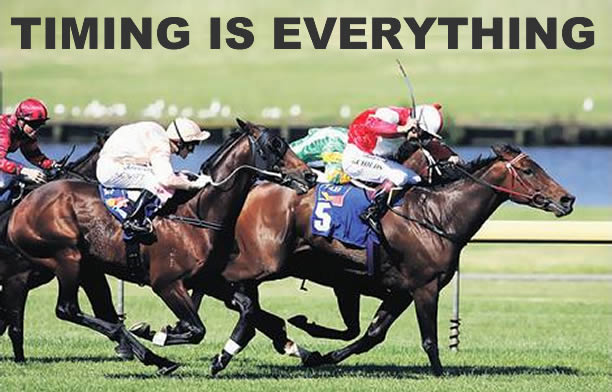
I once met up with a famous New Zealand/Australian jockey Greg Childs who retired
in 2008 and had over 2100 wins to his name. I didn’t really know too much about him at the time but had heard of his name.

Anyway we were having a chat at a cafe and I asked him what makes a good jockey and he answered simply by saying “timing”.

Well, when you think about it, that probably sums up just about everything in life.
TIMING, all I have to do now is learn how to understand and master it.

  • Get to know the horse (vehicle)
  • My horse’s trainer
  • The competition (horses, riders and trainers)
  • The conditions
  • The track

Once again I guess it all comes down to preparation first and knowing my industry to get my timing down pat.

Posted in Agreements | Leave a comment

Don’t Throw Out the Personal Agreement with the Promise

hands_PNG942
It seems to me that everyone has been burnt, at least once in their life,
by someone making a promise that they did not keep, or experienced a failed compromise.
(note the spelling of compromise ie com promise). Or maybe you failed to live up to a promise or compromise. Either way, because of this some of us are now hesitant to even make an agreement or maybe we should be.

Well I have news for you, I don’t think that personal “agreements” are the same as promises or compromises. And in my view, we can even “agree” to make personal agreements even more different than we could imagine. Yes, that is the power of personal agreements and of using our imagination.

For me, it takes just one person to make a promise but it takes two to make an agreement and that can be anything now and evolve into even more later.

Posted in Agreements | Leave a comment

Mere Mortals

Untitled-5
I went to a Startup Meetup on the Gold Coast last night where the guest speaker delivered his ideas but as is usually the case in these type of venues, he spoke very didactically, never once emphasising that it was only his opinion and in fact emphasised that he knew!

I mentioned this to him afterwards saying that not a sole in the room disagreed with him but then again how could they when the “guru” was speaking. I later found out that there seemed to be a lot of dissenters in the room but none dared to speak up, even during “question” time. (that always intrigues me how there is only the possibility for questions and not comments or dissenting views)

Anyway, speaking with another person there and trying to make my point when he replied that it was a given that the speaker was speaking from an opinion. He has a point, in my view, as what else could he be speaking by but his opinion?

So, why is it then that we preface our statements with, “in my view…” or “to me…” etc etc,
when the only thing that can come out of our mouths can only be opinions?

Because, in my view, we are not all that reasonable and need to remind ourselves and others, at least occasionally, that we are not all-knowing and simply mere mortals, after all.

Posted in Agreements | 1 Comment

Flying is Trying

119-600x378
I think I might have just about cracked it!…(for now)

After 30 years of searching I think I have finally come up with what I think is the foundation of what makes a relationship “work”.  It might take me another 30 years to
competently explain it, but here goes.

I call this the Relationship Operating System (ROS) just like an OS that computers and mobile phones use. And then, on this, all other agreed applications can be built.

It consists of :

  1. The Agreement Agreement
    We get an agreement on what an agreement means to us.
    For example it is not a promise or compromise but what we agree to try,
    see how it goes and then pump the results back into the agreement.
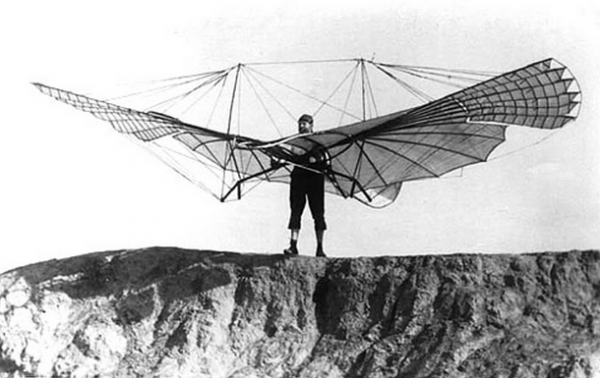
  2. Trying is Flying
    Making a proposal for an agreement is critical by both participants. And like wings, there needs to be a balance with both pulling their weight. If we stop moving forward
    we stall. When we stop trying/flapping we fall out of the sky.
  3. Stand up for Stepping up
    Whoever considers themselves the expert should be taken seriously
    and we try it out for size. But they are now both accountable for the direction
    and will need to explain how and why it did not turn out if it actually doesn’t and what part each played in the failure. With stepping up comes responsibility for both.

Finally, pump all the results/data back into the next proposalagreementtry
and continue.

Update:
So if trying is flying, the next question is trying what and I say it is trying to be explicit and the seeking of explicit agreements, maybe!

Posted in Agreements | Leave a comment

What Steve Jobs Thought About Big Companies

Playboy Interview: Steve Jobs

PLAYBOYFEBRUARY 1985

Jobs: I do feel there is another way we have an effect on society besides our computers. I think Apple has a chance to be the model of a Fortune 500 company in the late Eighties and early Nineties. Ten to 15 years ago, if you asked people to make a list of the five most exciting companies in America, Polaroid and Xerox would have been on everyone’s list. Where are they now? They would be on no one’s list today. What happened? Companies, as they grow to become multibillion-dollar entities, somehow lose their vision. They insert lots of layers of middle management between the people running the company and the people doing the work. They no longer have an inherent feel or a passion about the products. The creative people, who are the ones who care passionately, have to persuade five layers of management to do what they know is the right thing to do.

What happens in most companies is that you don’t keep great people under working environments where individual accomplishment is discouraged rather than encouraged. The great people leave and you end up with mediocrity. I know, because that’s how Apple was built. Apple is an Ellis Island company. Apple is built on refugees from other companies. These are the extremely bright individual contributors who were troublemakers at other companies.

You know, Dr. Edwin Land was a troublemaker. He dropped out of Harvard and founded Polaroid. Not only was he one of the great inventors of our time but, more important, he saw the intersection of art and science and business and built an organization to reflect that. Polaroid did that for some years, but eventually Dr. Land, one of those brilliant troublemakers, was asked to leave his own company—which is one of the dumbest things I’ve ever heard of. So Land, at 75, went off to spend the remainder of his life doing pure science, trying to crack the code of color vision. The man is a national treasure. I don’t understand why people like that can’t be held up as models: This is the most incredible thing to be—not an astronaut, not a football player—but this.

Anyway, one of our biggest challenges, and the one I think John Sculley and I should be judged on in five to ten years, is making Apple an incredibly great ten- or 20-billion-dollar company. Will it still have the spirit it does today? We’re charting new territory. There are no models that we can look to for our high growth, for some of the new management concepts we have. So we’re having to find our own way.

Posted in Agreements | 1 Comment

Hang Loose Agreements

2000px-Sign_language_Y

Hang Loose Agreements

Imagine, just imagine, that we could make an agreement with someone on what an agreement meant to us? That we could agree that anything, at any time, could mean anything to us and only us, if we agreed to it for now. Well believe it or not but I think that this is possible and actually do-able.

For example, upon reading this, me and you could actually agree to this for starters and see how it pans out. An agreement on non binding or hang loose agreements.

So why would any two people want to agree to such a thing. Well the beauty is in the doing and seeing the results. It is a little harder to explain why such an idea can work but let me try.

Let’s say that we agreed upon a statement like “anger is understandable but not acceptable” and that we can hold each other accountable for any anger that occurs during a conversation.

Regardless of whether the statement is “true” or not, we simply agreed to it.
At any point, when one of us felt that the agreement was coming under threat of being repealed, we could ask the other, in an agreed protocol, if this is so and if they wish to continue the conversation with a goal to change the agreement.

By having the agreement in place, it means that we have an explicit connection for how we will behave, for now, and a confidence that we can deal with the issue of anger at any time one felt that it was rearing its head.

And this can all be done because we have an explicit connection of what an agreement means to us, for now and how we go about utilizing such an agreement.

In other words, if no agreement, then no expectations. And even with the agreement we can still have no legitimate expectations, only once again, an agreement of how we can rethink our existing agreements so that we can apply a better one.

So next time we feel some resentment or anger coming on because of what someone has said or done, we can simply ask ourselves “do we have an agreement with them” and even if we did, it obviously was not a very good one, so far.

Posted in Agreements | 2 Comments

Bi-polar Behavior

Untitled-1
I hope we would all agree that the taking out of our frustrations on someone else or ourselves is, although understandable, not acceptable.

This behavior usually takes the form of anger and can result in the abusing of others and
even ourselves, mentally, emotionally and even physically.
So, hopefully, now that we agree that this form of behavior is understandable but not acceptable, then we could ask what can we do to prevent it from occurring?

Okay, I will let you into a little secret. For the last couple of years I have been unable to get one person to agree that anger (all) was understandable but not acceptable.
So now I have decide to skin this cat another way and come from this angle of taking our frustrations out. Surely no one is going to stand up and try defend our right to take our frustrations out on others? Although for years people have been trying to defend their right to me, to get angry or to take out their frustrations on specific others. Now we seem to have a dilemma or a conflict of ideas.

The conflict that I think exists is that someone that has agreed that we do not have a right to take out our frustrations on anyone else will now want to say “in most cases”, and leave the door open for when they decide is appropriate  to do so. And use such extreme examples as when someone kills their mother, they then decide that they have the right to take their anger and frustrations out on the perpetrators.

What this does, in my view, is sets ourselves up to decide who, when and where we choose to take out our frustrations on and also on the slippery slope of endorsing anger and abuse in certain cases that we can decide.

This explains to me, why there is still so much taking out of frustration and anger on others when at the same time it is obviously so unacceptable to all of us.

It may even explain bi-polar behavior.

Posted in Agreements | Leave a comment

What is Anger?

In my view anger is:

…the display of frustration or annoyance of a behavior or series of behaviors.

Why is this important? Well, when I mention that “anger is understandable but not acceptable”, most people tell me that they cannot control their emotions.

Now I would simply respond by agreeing with them and state that I think that we can however, control the behaviors, our own and others, before they frustrate or annoy us.

Posted in Agreements | 2 Comments

The Inter View

entrevista

Hey what about this that there are three types of views in the world:

1. My View
2. Your View and the
3. Inter View.

“What is the Inter View…? you ask
Well, you just started it!

Posted in Agreements | Leave a comment