
My thoughts on how to cure domestic violence
My thoughts on how to cure domestic violence

Speaking with a mate yesterday and we compared philosophies on the mating cycle.
Mine was that aiming to have sex with every attractive woman can effect what we are willing to say during the process.
My mate’s response was that he wants to be an expert and that takes 10,000 hours experience. I guess he is looking for a woman with 10,000 hours experience also.
Personally after ten thousand hours I would be exhausted!

I was speaking with my brother Steve the other day and he reckons that although women
generally will not initiate conversation directly with a man that they will tend to do it indirectly using their eyes, a smile or some other body language. That may well be the case but in 2014 not 1914, I would have thought things may have changed somewhat.
So here we are, over 100 years on from the Victorian era and we still don’t even question the acceptance of such unequal behaviour of indirect conversation from women with men. Times have to change, I reckon.
Other forms of indirect conversation are gossip and anger and I think that I am the only person in the world that states that I will not accept all three.
What we cannot identify as a disagreement is an ‘agreement’ by default, that’s all.

Everyone seems to talk about the merits of the team and teaming up, running of a
dynamic team etc. But how do we deal with the team within the team, ie when members team up against a team member or other team members?
Teams, groups or organisations are very organic and dynamic with teams within teams
or cliques forming and disbanding constantly. This dynamism can be be very disruptive
to a team in some circumstances.
If the team does not have a process of dealing with individual issues or disputes then
maybe it is time to get out of such a team.
By process I mean an awareness of the existence of “teaming up” and the problems that
it can cause the team as a whole. Also a way to deal with it and the issues that are involved
in teaming up.
Most businesses are measured by their turnover of staff or team members. This turnover
is an indicator of internal problems within the team, starting from the top.
The Problem
For example if you have a problem with someone within the team, including and especially a “superior” or boss, how do you deal with it
If you go to your friends and complain to them about him/her then this is gossip and in effect you are teaming up with them, forming a team within the team or a clique and excluding this person. Anyone participating in this gossip, by listening, is also participating in teaming up against this person.
“But this happens all the time” I hear you say, and I agree and so do all the associated
social problems that go with such behaviour.
The Solution
I am suggesting a team use an agreed process of dealing inclusively with someone that
you have a problem with. ie If you have a problem with someone, then you simply activate
a 3 step process, like this for example, knowing that you are protected by the agreement
within the team.
1. That is you go directly to the person that you have the issue with and discuss it to
see if it can be resolved.
2. If not then include another person, preferably a peer, to hear both sides of the story.
3. And if you still cannot resolve the issue then bring the team member before your
team peers to put your cases. This could be done at a weekly team meeting, for example.
If this issue escalated to this point then there is an obvious major problem and if left unchecked could result in a very real problem within the team and could result in a real schism forming. At this point the team or peers can decide the solution. But you know, somehow I doubt an issue would ever get to this point without a resolution beforehand. Facing one’s peers can be a pretty powerful reason to work things out beforehand.
This is my suggestion for resolving issues between team members and especially with
resolving issues with “superior” team members. Wouldn’t it be great to know that if you
had a problem with your boss that you could take her before the team if you could not
resolve it face to face or with a fellow team member?

The team within the team can be a very powerful thing and can benefit or disrupt an organisation or relationship entity.
Imagine three in a team. One decides, based on sound evidence, that this is the
direction that they, as a team, should go in.
The Second decides that that One is wrong and hesitates to follow her.
The Third simply follows the Second.
We now have a team within a team and it is fractured. One is in a team of her own
and the other two are maintaining their direction although they have now been disrupted by One.
My theory is that taking sides occurs within partnerships (business and personal)
friendships, companies, and organisations and responsible for untold grief to all of
these entities.
My take on taking sides is to first identify that it exists and that it is a real problem,
causing destruction in groups of more than two.
Second, is to form an agreement within the team to overcome its powers.
I suggest that we could agree to something like “whoever has the best idea rules”.
as a solution to this problem.
ie. If someone has an evidence based idea and no one has a better one to counter it
other than status quo or a gut feeling (unfound fear or hope), then that idea should be followed, at least in a Lean test environment.
Also, recognising or identifying the three personalities in this situation of change
and its inevitable confusion, is also important in dealing with this issue.
ie
1. The spontaneous leader (First)
2. The spontaneous defiant (Second)
3. The spontaneous defiant follower (Third)
Taking sides for personal or vested interests or simply because of laziness can
lead to the disruption and ultimate destruction of the original team, in my view.
Which personality do you usually act out in your organisational entities and which do you want to be?

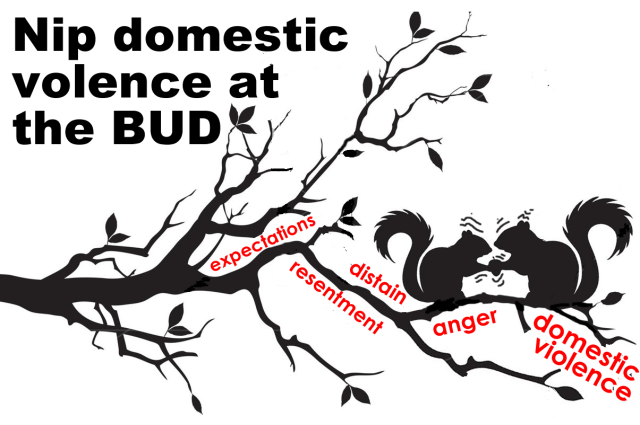
Why is that that most people, that I ask, seem to think that anger is acceptable?
But when I ask them if domestic violence is acceptable I have not found one taker.
Yet domestic violence is only the symptom or result of anger.
But still we find the symptom (violence) unacceptable and the cause (anger) to be acceptable!
Do you see how strange this sounds?
It’s like saying that the faulty oil pipe in the A300 Rolls Royce jet engine is
acceptable but the resulting plane crash that was caused by it is not acceptable.
I say that when we make the cause of domestic violence unacceptable we will
be on our way to creating a better world.
Anger is understandable but not acceptable, to me.
If you ‘accept a person for who they are’ (their anger included), then you’ll expect them to accept you and your anger also.
And, to me, you’ll both receive what you ultimately accept, your anger included.
What about this?
We can’t fix or resolve a disagreement (resulting in a dispute) any more than we can’t fix or resolve a plane crash and the 300 people that were killed in the crash.
We can’t resolve or rectify a disagreement/dispute, its crashed already but we can identify where and why it crashed
Most people equate resolution or resolve with disagreement/dispute and because it is not possible, quickly give up.
By identifying where and why the disagreement/dispute occurred we prepare so that we can get much further next time until our next crash and identification.
 Imagine that two people agreed that their anger was understandable but not acceptable. That is, they could appreciate the other’s anger and their own but not find them acceptable?
That could be stage one to the start of “the test of a first rate intelligence…” or maybe so thought F. Scott Fitzgerald when he famously said: “The test of a first rate intelligence is the ability to hold two opposed ideas in the mind at the same time, and still retain the ability to function.”
Well, not only am I predicting that these two people can function but prosper by agreeing that anger is understandable or appreciated but not be acceptable to either.
So what happens after this agreement is made? Well, they could then make an agreement to start to identify areas of value differences or disagreements but not to try to rectify them.
Once again, identifying problems without resolving or rectifying them is another test of a first rate intelligence, in my view. So why not rectify our differences or disagreements as well as identify them? Well, I think that there would be no reason to rectify our disagreements if we truly set about to just identify them.
By identifying them solely, I believe that the disagreements will rectify themselves. Worth a test.
 rethink PERFECT