Small, Medium and Large Talk

We all know what Small Talk is, right! But what about Medium and Large Talk?

Large talk is the opposite to small talk (obviously). It consists of controversial issues,
or when we are conversely speaking. Debates, posing arguments on subjects that are very personal to us such as sex, politics, money, business, secrets, love, and parenting for example. Generally we do not have Large Talk with people that we just met at the bus stop. People in relationships can take years before they ever get to the largest of talk and some never even make it at all.

What if we used an agreed method or process to get us from Small Talk to Large Talk?
This is where, you may have guessed, that Medium Talk comes in.

Medium Talk, in my view, is the process that we agree to use with each other within a relationship on how we go from Small Talk to Large Talk. That is, we use Medium Talk to create a “medium” that facilitates Large Talk.

I think that most people seem to bypass the Medium Talk concept and resort to speculation or gut feeling to determine how large or small a conversation they can have with someone else. Whereas Medium Talk can take the speculation or degree of risk out of the equation and make the possibility of Large Talk more predictable, practical and manageable.

Here is the “medium” that I have prepared earlier that my brother and I agree to use for moving from Small Talk to Large Talk.

· Deadlines = expectations = resentment = anger

· All anger is understandable but not acceptable to us.

· When one speaks one can detect levels or degrees of anger using three simple measures of
non-Adjustable, non-Accountable and non-Acceptable language.

· Once detected one needs to respond with Appreciation, Acknowledgment and Apology rather than falling into the anger trap of non-Adjustable, non-Accountable and non-Acceptable language.

· All conversations (Big Talk) can be investigated afterwards, like a black box recorder to spot the errors as per the agreed “medium”, and to help improve the learning process and medium.

· It takes two to tango.

Like any art or medium this needs to be practiced to be mastered.
Posted in Agreements | 3 Comments

Piece by Peace – Tripcover’s Cultural Values

Piece by Peace – Tripcover’s Cultural Values.

Posted in Agreements | Leave a comment

Predicting Our Future

*This is a sketch in my thought processes on how we possibly make decisions.

Predicting permeates every facet of our lives. We predict that the sun will rise in the morning, that our heart will take its next beat, our lungs draw its next breath. We predict thousands of movements of our limbs every day. We even predict that our brain will continue making all of these predictions for us day in day out. Of course most of these predictions are not so conscious but never the less they still exist and it is how we survive and thrive as a species.

But what about our more conscious predictions or what we more commonly call plans. How do we go about making these and improve upon this process? I have a theory that our brains work like this. We Predict, then compare it with the Actual (our perception of the true result) ± perfect (A universal constant that we presume to exist)
and then Rethink the whole process again.

P = A±p = R(P = A±p)

What if we used a sequencing process similar to DNA to store our ideas and memory where the sequence always read: PApR-PApR-PApR-PApR-PApR-PApR-PApR-PApR where a prediction always connected to an Actual ± perfect and an Ap always connected to a Rethink.

In this way we can select any A±p and slot it in between a P and an R and get a result.

This process could be going on unconsciously, hundreds of thousands of times a day as our brain pulsates instantaneous calculations throughout the day but also up to 65,000 times a day as we make unconscious and conscious decisions.

Each time honing our skills in the whole process of predicting or planning ahead (it is what makes professional tennis players or golfers so good). If what I am saying is true and this resembles our predicting (thinking) process then if we consciously learned to master this or what ever process we used to predict our future decisions then surely we could improve upon it.

Posted in Agreements | Leave a comment

As Good As it Gets Choosing Process

As Good As It Gets Choosing Process

As Good As It Gets Choosing Process

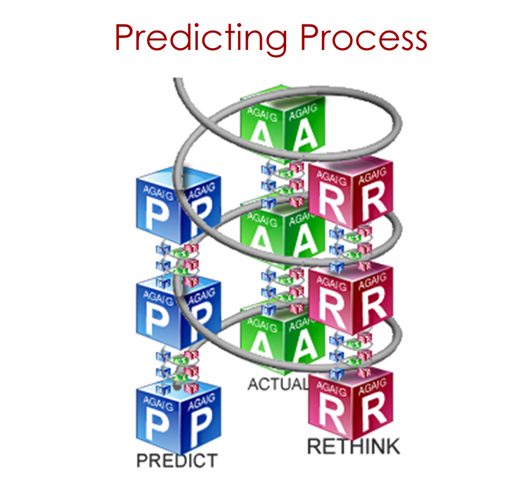
Here is something to blow your mind. This is a diagram that I have come up with that I am
trying to use to explain how I want to try make choices.
The frame is made up of:

· Blue P cubes for Predicting

· Green A cubes for Actual results and

· Red R cubes Rethinking or Re-evaluating.

Note the fractal where the framework is repeated over each cube. So I will predict, actualise & rethink each Prediction, Actual and Rethought in micro steps also.

The AGAIG in each cube is an attempt not to judge or criticize each step in the spiral outside the cubes. Creating all the work for making a choice in each step or micro step and allowing for the space or nothingness to coexist.

Posted in Agreements | 2 Comments

Deadline to Failure

It is 2013. A time when modern companies are seeking to make their staff feel more inclusive and more part of the team rather than a slave or a prisoner. Companies like Google, Apple and Facebook reach out to their staff in as many ways as they can think of to achieve this more progressive and modern thinking.

Given all of this, one would think that the use of such an archaic term as “Deadline” would be totally removed from any such company seeking such positive relations with their staff?

dead·line – noun

1. the time by which something must be finished or submitted; the latest time for finishing something.

2. a line or limit that must not be passed.

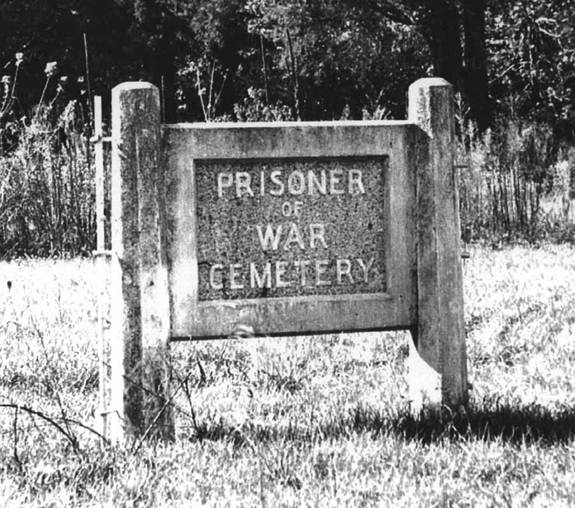
3. (formerly) a boundary around a military prison beyond which aprisoner could not venture without risk of being shot by the guards.

I have posed this thought to a few people in start-ups recently but the idea seems to fallen on deaf ears or maybe I need to keep working on my concept. Most think that running a business is not possible without deadlines. I beg to differ. Over the last 2 years I have been running a startup and have used my favourite saying to get me there so far.

That is “step by step”. This is a slow and steady approach to getting to where we want as opposed to setting any deadlines. I guess when one is doing most of the work on a shoestring and getting paid peanuts, there is no point in stressing. Also working for a large global multinational, Allianz Global Assistance, one gets to realise that no much gets done in a hurry and so setting any deadlines is ridicules in this instance.

One way to simply bypass deadlines is to get your workers to quote for a job and then let them meet that quote. When one is setting one’s own “deadline” it is not really one, as we are not likely to shoot ourselves.

In a lot of ways the use of deadlines are ridicules, in that they are rarely achieved and in a lot of cases miss the mark considerably. The fear and stress associated with them seems to restrict getting early feedback that it will not be achieved, ultimately contributing to
this bad time management, in my view.

So what can we use to replace Deadlines? Well what about milestones? That is, instead of using the proverbial stick we use the carrot to achieve our goals. And instead of rules we substitute guidelines.

All in all I give any use of imposed Deadlines 5 out of 10 for people management. Any feedback much appreciated.

Posted in Agreements | Leave a comment

Difference Vs Indifference

Difference works sometimes but most times it doesn’t

If I were to address a room full of people and asked them to put up their hand if they believe in the saying “Think Different”, I bet everyone will put up their hand. The irony is that if there was one person that put up their hand after, to disagree with this, then they would actually be thinking differently, in my view and even more so would “Be Different”.

I would like to be that person but it is not so easy to do. I do not believe that thinking differently is so important but more to “be different “.

I think that to achieve success as a brand it is necessary to be different which is what we all are by the default. So, all we have to do is find our difference or differences and amplify them until we find the one that is valuable to our potential customers.

Also by allowing and encouraging difference in others allows us to be different ourselves.

The pressure applied to us to conform is huge in a society. It seems that difference is anathema to organisations as it tries to organise and streamline processes and get individuals to fit in to them. Indifference is the usual response to anyone that is being different and so the dilemma of difference versus indifference goes on.

Being different does not mean that it will be successful necessarily as most times in nature difference means failure, like a rainbow Zebra, for example. But occasionally difference can be successful and this is what I think difference is for, and what we can nurture, i.e. our very own differences.

Being different is not easy and although it is natural, in my view, it is also frowned upon and difficult to take a stand on our difference. I think that if we can learn to take this stand of being and showing our natural differences together, we can achieve anything that we set our minds to.

Vive la différence!

From Wikipedia on “Think Different:
Steve Jobs in interview for PBS’ ‘One Last Thing’ documentary, 1994:

When you grow up you tend to get told the world is the way it is and your life is just to live your life inside the world. Try not to bash into the walls too much. Try to have a nice family life, have fun, save a little money.That’s a very limited life. Life can be much broader once you discover one simple fact, and that is – everything around you that you call life, was made up by people that were no smarter than you. And you can change it, you can influence it, you can build your own things that other people can use.

The minute that you understand that you can poke life and actually something will, you know if you push in, something will pop out the other side, that you can change it, you can mold it. That’s maybe the most important thing. It’s to shake off this erroneous notion that life is there and you’re just gonna live in it, versus embrace it, change it, improve it, make your mark upon it.

I think that’s very important and however you learn that, once you learn it, you’ll want to change life and make it better, cause it’s kind of messed up, in a lot of ways. Once you learn that, you’ll never be the same again.

Posted in Agreements | Leave a comment

What is Rethink Perfect

Rethink Perfect is a thinking process that helps resolve and ultimately prevent work and personal relationship disputes.

Posted in Agreements | Leave a comment

The Power of Agreements

As soon as we as a society (Australia) agreed that capital punishment is unacceptable the institutional killing of criminals stopped.

As soon as we as a society agreed that homosexuality is acceptable the incarceration of homosexuals stopped and they are allowed to marry.

As soon as we ALL agree that anger is unacceptable, I think that anger will stop.

Posted in Agreements | 3 Comments

As Good as it Gets

Imagine if we had conversations where we all agreed that whatever we hear is
in and for the present and is “as good as it gets” (AGAIG). That we simply focus on the here and now of how we think and feel without advising each other on the future and passing judgement on what we say about how we think, feel & act today. I think this is what is meant by “As good as it gets”.

Try it, it’s not so easy, but it sure is an interesting and refreshing way to converse and creates a process for an open and relatively honest way of exchanging different and unusual ideas.

My brother and I spent the last week interviewing/conversing with a potential CTO for our new business pablow.com and we tried this process out, working it out as we went along. We all seemed to be able to disclose stuff that in any other circumstances we might struggle with. Granted the candidate is my brother’s friend but I believe that the AGAIG process is an excellent way to bring down the barriers of forming judgements and allow us to simply listen. This, in turn, encourages more open disclosure, especially as we all participate and lead by example.

Posted in Agreements | 2 Comments

Seth’s Blog : Does anger follow the laws of thermodynamics?

Seth Godin’s thoughts on anger, it is not too bad, but unlike him, I do see some value in anger in that we can thank them for their expression and then help redirect it into a more constructive contribution.

Does anger follow the laws of thermodynamics?

I have no idea what caused the guy in front of me in traffic to be having a bad day.

Maybe he has a stressful meeting coming up, or his butler burned his bacon at breakfast. Maybe he’s having trouble paying his rent, or his industry is under seige. All I know is that he’s weaving in and out, giving people the finger and yelling at other cars, all at the same time.

Unlike cupcakes, anger isn’t conserved.

If I have a cupcake and I give it to you, I don’t have a cupcake any more. But if someone who is angry gives you their anger, now you both might have it.

You’ve seen it too many times before. Someone is afraid, untethered or just upset about something that happened long before you walked into the room. Unbridled agita is dumped on you, spittle flying, eyes wide, personal invective unfiltered. Just feet away, the angry person is saying, “here,” and dumping vitriol in your direction.

All connection gets severed, any chance for positive engagement seems long gone. The opportunity, it seems, is to pick up some of that anger and throw it right back, where it came from.

And now, of course, both of you are having a bad day.

Shared anger destroys trust. It eliminates dialogue. It activates the lizard brain of everyone within earshot, and produces nothing of value.

No credit goes to the person who vents, who opens his spleen and shares his anger. No points for bravery or honesty or getting in touch with his feelings. Anger shared is not anger ameliorated.

Talk about it, don’t talk with it. Point it out, and then leave it there, on the floor, where, unengaged, the anger can’t help but wither and die.

Posted in Agreements | Leave a comment