Relative Views

Untitled-2

People in relationships are in one to relate their relative views, in my view.
To me, “you are wrong” is not a relative view, “I think you’re wrong”, is.

And when it come to it, we seem to have the biggest trouble being relative when conversing this with our relatives.

Being relative is the hardest process in the world, in my view.

Posted in Agreements | 1 Comment

Rethink Co-founders and Couples

What do co-founders and couples have in common?

  • They both have formed partnerships
  • They start without explicitly agreed to, rules of engagement (or disengagement)
  • “Small” disputes are usually swept under the carpet (until they become lumps)
  • More fail than succeed
  • Can be very expensive mistakes
  • No one can seem to pin point the exact, common cause, of the failing.

RethinkPerfect.com is my proposal that I think can begin to solve the problems
that occur in both and answer the unanswered questions, pin pointing the exact cause
that lead to both failing.

Ask me what I think that cause is?

Posted in Agreements | 3 Comments

The Third Reality

reality-tale
What about this?

I think that there are two types of reality, yours and mine.
There may be more but that would fall under the realm of either yours or my reality, in my view (or reality).

I think the sharing of an agreement (or reality) that there is another reality besides our own is the beginning of finding the Third Reality.

Rethink Perfect is my proposal for the Third Reality or the finding of it and I have one shared agreement, with my bro, that it exists, but of course there are many possibilities for sharing of a third reality. I guess everyone is looking for the Third Reality, and maybe it can only be continually found by the sharing (not preaching) of it.

Posted in Agreements, creative thinking, Relationships, Thinking | Leave a comment

Somewhere In Bewteen

I have recently had a Facebook conversation with someone where they told me:
“I don’t believe in balance. Balance is bullshit!
This was in the context of me telling him that

Yeah but why does their focus on “abstract success” effect you? You don’t have to follow them do you? I think it is like the old cliche about finding a balance. I am looking to improve my knowledge on relationships with Rethink Perfect and achieve some independent financial success as well and I try avoid bullshitting and point out when I think someone is bullshitting to me, simples.”

He replied:
“well your viewpoint is quite individualistic. It doesn’t affect me directly. I want to change the world and I think sharing what I learn with others is something what I need to do. This is not about me is about a whole system that involves others. I don’t believe in balance by the way. Balance is bullshit..”

and also

“balance is a human mental construct that doesn’t really map to anything apart from making us “feel” better. I strongly believe in entropy and the human tendency is always entropy….”

I have been racking my brain how to answer this statement of attack on balance as it forms a big part of my thinking. And I have come up with “somewhere in between”.

I get told a lot that I think too much or over think, for example and have never been able to answer their, what I felt, was an accusation. But now I think I have it.

For example:

Person: “You over think!”
“Well I would rather over think than over act, but somewhere in between would be nice.”

or

Person: “You think too much!”
“Well I would rather think too much than not think enough, but somewhere in between would be nice.”

Person: “You focus too much on balance”
“Well I would rather focus too much on balance than focus on being powerful or powerless, but somewhere in between would be nice.”

Person: “You focus too much on yourself”
“Well I would rather focus too much on myself than focus too much on the world, but somewhere in between would be nice.”

So from now on I will try use this template when anyone gives me their advice:

Person: “You ______ too much!”
“Well I would rather ________ too much than not _______ enough, but somewhere in between would be nice.”

Posted in Agreements | Leave a comment

Redressing Imbalance

balances

When one thinks about it every “conversation” that we have, ie dialogue
with converse views and conversely speaking, is about redressing some sort of imbalance or perceived imbalance.

Whether is it a Personal Imbalance, or an imbalance between the two people having the conversation (Interbalance) or an imbalance between someone’s personal imbalance and their interbalance (Intrabalance)

Ultimately it is in our interest to redress these imbalances rather than maintain them so learning to appreciate any such redressing is an imperative in my view as it encourages
participation and we all know that “practice makes perfect” but I prefer “practice helps us perfect”.

Posted in Agreements | Leave a comment

Thanks!

From now on I am going to try say thanks to everyone that says something to me that I don’t like. Thanks for saying it. Thanks for keeping me in the loop. Thanks for taking the time and effort to inform me. Thanks!

Then and only then will I let them know how I feel about the content and their delivery of the message and hopefully they will feel the same about my contribution.

Will see.

Posted in Agreements | 3 Comments

The Contribution Imperative

Imagine if we agreed that that no matter what was said or done that we appreciated the act of contributing above the quality of the content or delivery.
My guess is that this is a world changing idea.

After all, we use the term “relationship” when people are together, so imagine if we valued the “relating” more than the content or delivery. That we did not expect the quality of content or delivery to be excellent only that we did just that, relate and we appreciated that we related.

Why do I think appreciation of contribution is lacking in relationships? Well my prediction is that in your last dispute, you and the other person failed to appreciate each other’s contribution above the content or delivery. Am I wrong?

I think that this is an interesting thought and something I would like to try but I also believe that to actually follow through and carry out this approach would be very difficult
and may need some mnemonic tools to achieve this.

Posted in Agreements | Leave a comment

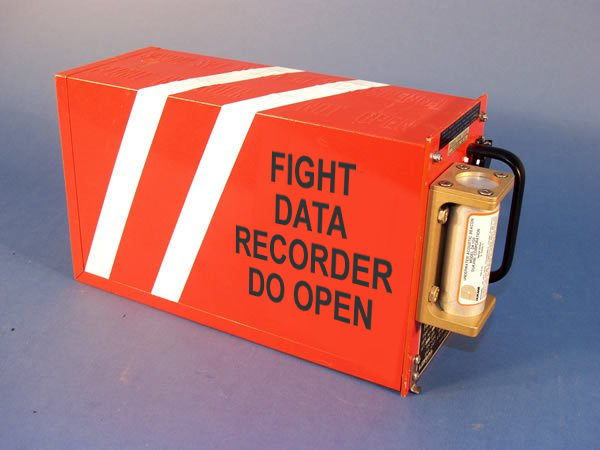
Fight Data Recorder

Untitled-1
What if we had a Fight Data Recorder that recorded the last 8 minutes of a conversation two people were having that led to a fight or dispute? We could investigate the cause of each dispute and, just like the airline industry, we could reduce the numbers and severity of them and thereby make conversation a much safer environment for resolving problems and issues.

Well I think I have invented one.

Firstly, I think that I have discovered the standard cause that runs through any and every dispute between two people.

For example:

  • Person A does or says something that person B eventually fails to appreciate.
  • Person B then eventually reacts to person A’s input.
  • Person A then eventually fails to appreciate person B’s reaction.
  • They now have a dispute or fight with no agreed process to resolve it.

Once this idea of appreciation has been proven to them and agreed to, the Fight Data Recorder has automatically been activated and they are ready for their next dispute.

Think of your last dispute between another person and see if I am right. Was there a failure on both sides to appreciate the other person’s contribution? I say “appreciate” their contribution, but not necessarily agree with the content or delivery. Appreciate being so important mainly because it is so much harder solving a problem in a vacuum, with zero input. So anything, for starters, is great for getting a better solution.

If this can be agreed to, that is, the value of appreciation above content and delivery,  then they have the beginnings of a Fight Data Recorder.  They would then be ready to have a conversation, knowing that when the next dispute or fight occurs they will be able to go back and identify the moment that both of them failed to appreciate the other’s contribution. ie.  It took the two of them to create the dispute (of lack of appreciation).

Then all they have to do is put up their hands and apologise for their own part in the failure to uphold their agreement to appreciate the other’s contribution or alternatively suggest a change in the agreement if either felt there was a weakness in it and an improvement could be made.

Surely this is worth a try?
Any feedback much appreciated.

Posted in Agreements | 2 Comments

Compromise Vs Convergence

image

Posted in Agreements | 4 Comments

Conversation Protocol

“Converse views”, “conversely speaking”, or “on the converse”, why is it that people do not get that “conversation” is the sharing of opposite views or converse views?

In our bipolar world of conversation we seem to be overly agreeing far too much and too often (absolutely!) or overly disagreeing (that’s bullshit, you’re wrong! ). The return of the “conversation” and converging closer to the golden middle could be a god send.

For millennia, an arms race of techniques have evolved that use forms of conversation to convert people into acquiescing. Techniques so clever that we are not even aware that we are acquiescing and think that we have agreed instead. Browbeating and bribes being the most common forms.
(Read 1984, by George Orwell)

I believe that the true use of conversation is to converge our views not to try to convert the other’s. I think that an agreement is necessary before we converse, that convergence is our
goal and not the converting of the other.

Once agreed to, I think we would then need to agree to expose these converting techniques
and apply our agreed converging ones.

And vollah! we now have a conversation protocol. Rethink Perfect is my part of the proposal for this conversation protocol.

Posted in Agreements | Tagged | Leave a comment