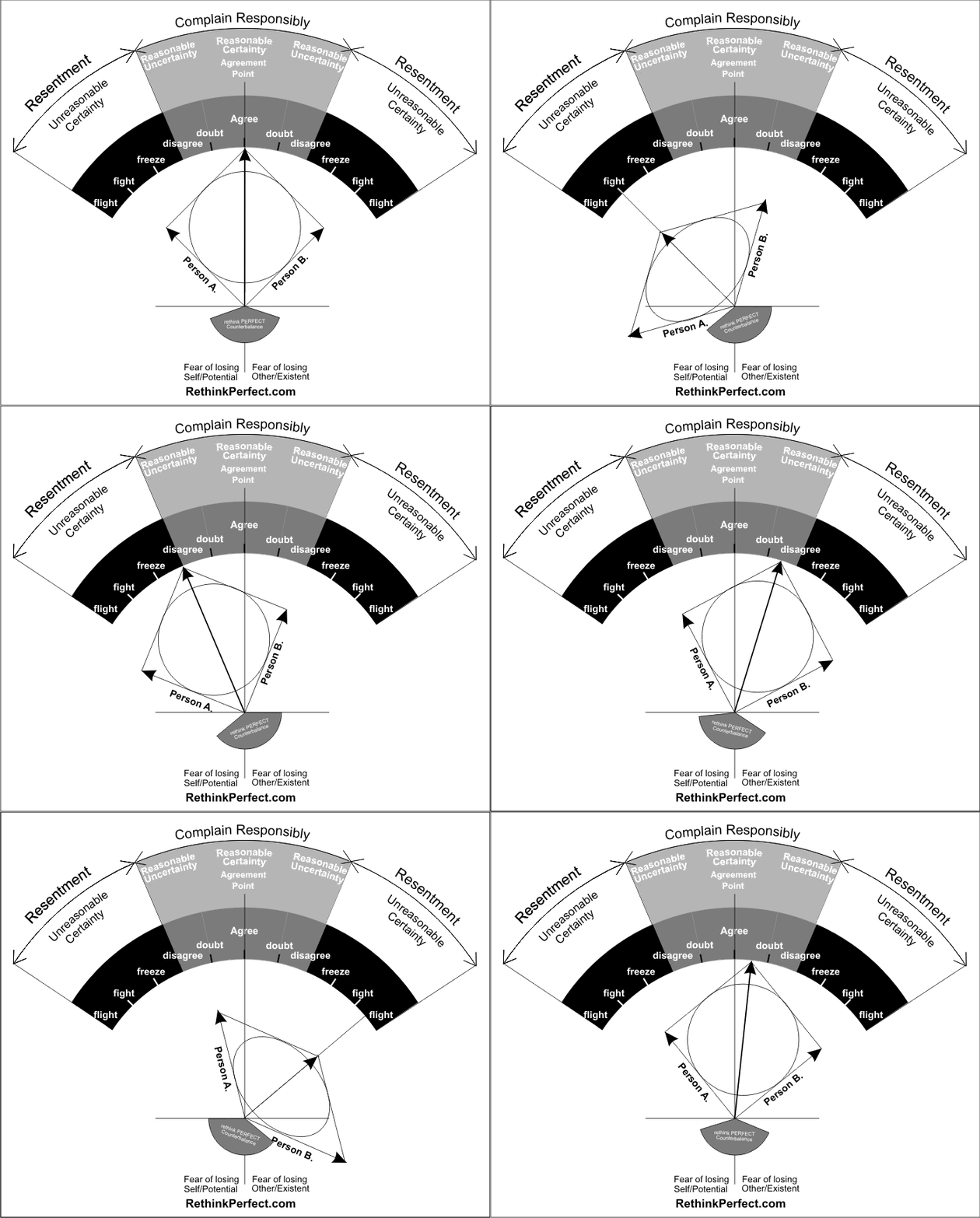
Who Are Conversations For?

Who do we talk for? Is it more for ourselves or for others?
Who am I posting this for? Am I posting this for you or for myself?

According to the Golden Rule it would be for our own sake first.
And I agree with this. I am writing this for my sake first and foremost.
So, writing a post or talking, for that matter, I should be trying to consider the
listener. Or to “treat the listener’s ears as I would have the listener treat mine”

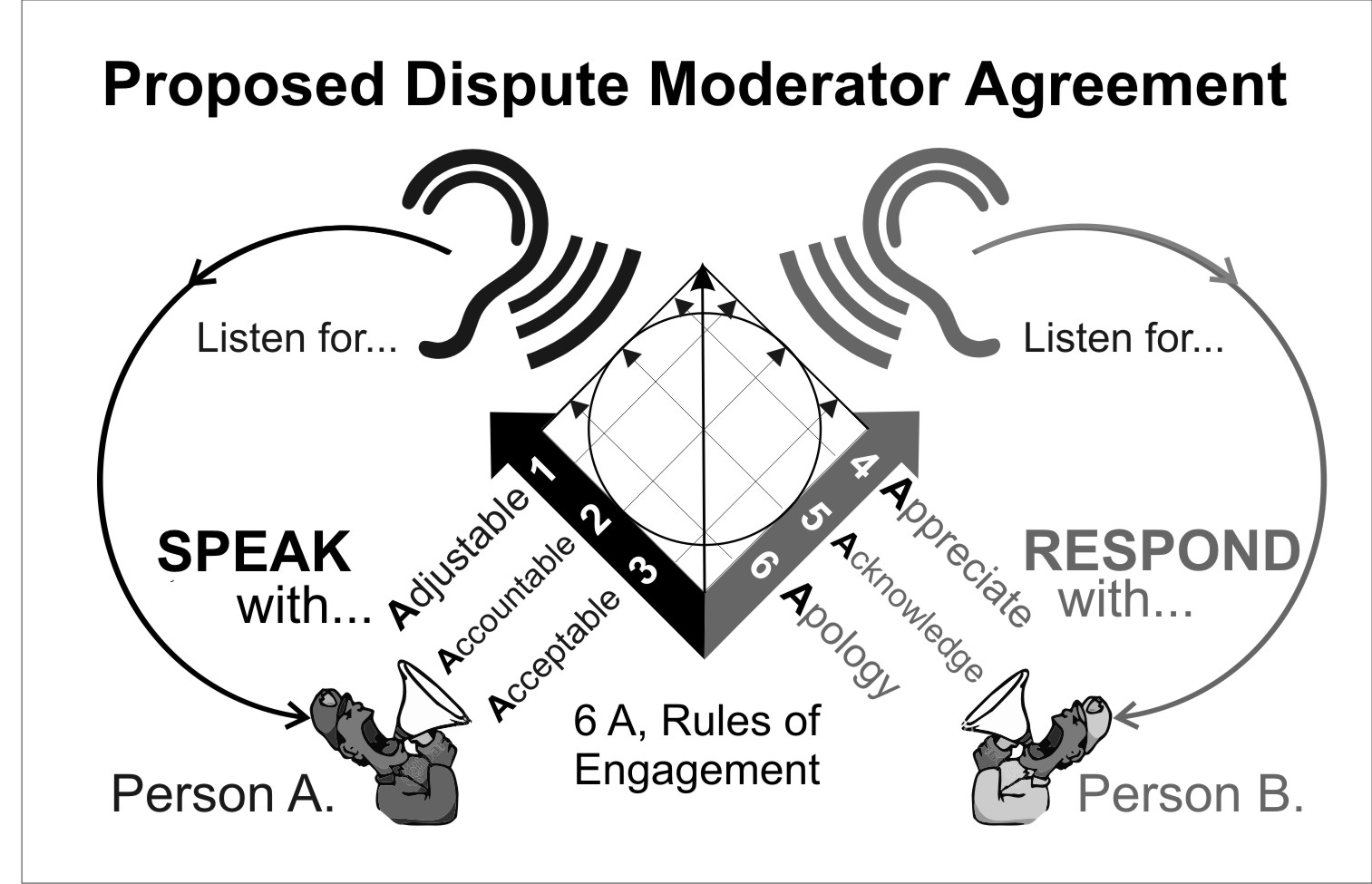
From this simple premise I have put together
three simple rules of engagement for speaking:

1. Adjustable
2. Accountable
3. Acceptable

And three rules of egagement for responding:

4. Appreciate
5. Acknowledge
6. Apology

All in an attempt to respect each other’s ears because I believe “our ears rule”.
According to what I hear and read around me I do not believe that this is what really goes on.

I think it is time for a change, time to get some agreements on rules of engagement.
What do you think?

Posted in Agreements | Leave a comment

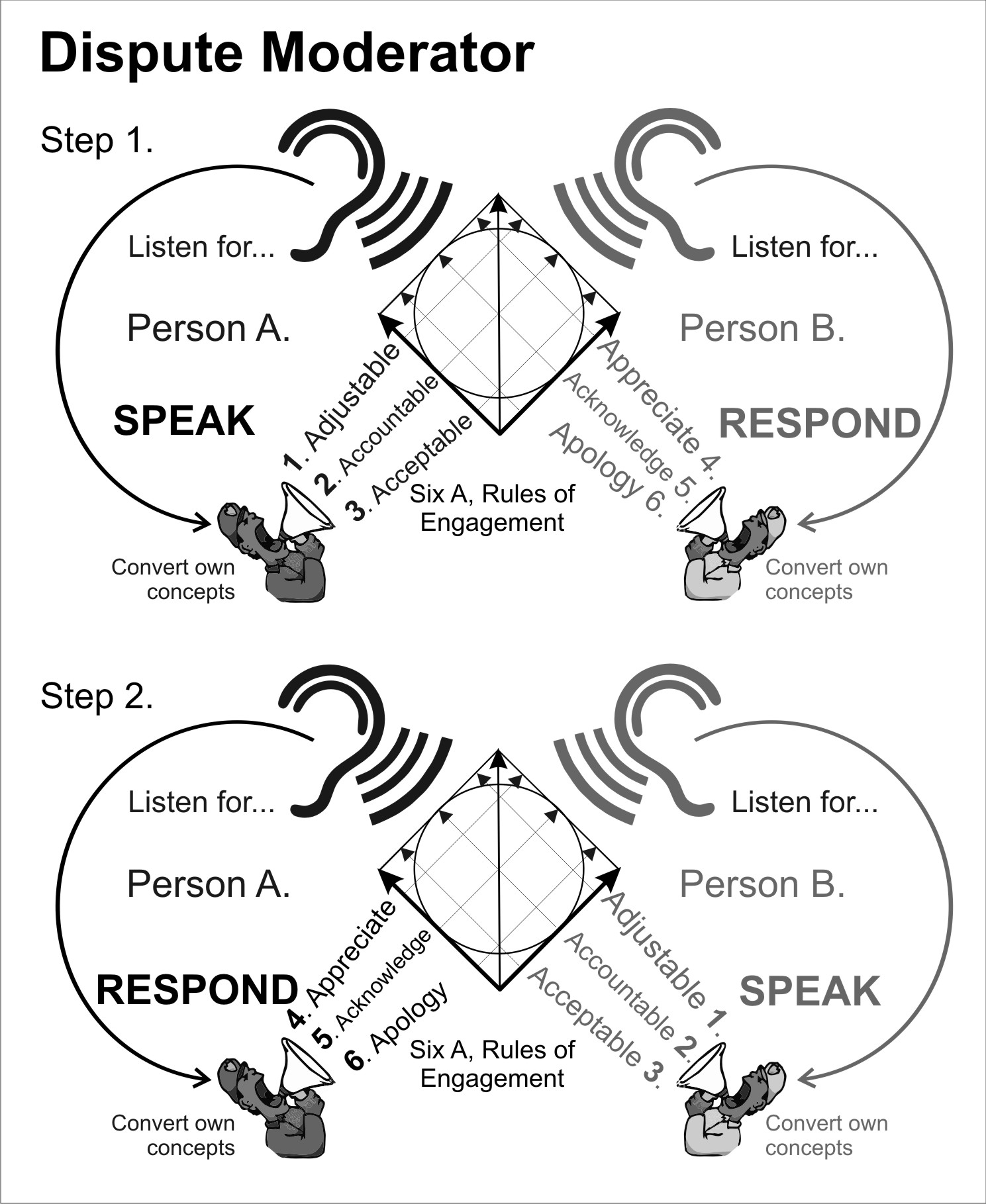
Rethink Perfect Dispute Moderator

Step 1: Person A agrees to speak using Adjustable, Accountable and Acceptable language in relation to Person B.

Step 2: If person B wishes to dispute the content and/or delivery of person A, they agree to respond with Appreciation, Acknowledgment and Apology (speech in defense).

Step 3: Reverse the process if Person A then wishes to dispute person B’s content and/or delivery. And so on and so forth.

Push Pull Effect: I think that what we say has an affect how we think as well as what we think has on what we say. Outsourcing others to keep us accountable, during conversation, is part of this process.

Posted in Agreements | Leave a comment

What is Rethink Perfect

Rethink Perfect is about building upon the agreement to: “try to hold each other
accountable to use a dispute moderator like the 6A Rules of Engagement when
conversing”.

It is not about one of us losing and the other winning the conversation.
When we agree to hold each other to account and fail we both loose the conversation.

Our agreement eventually becomes paramount over our individual egos or
our desire to always be right (win).

What are the 6A Rules of Engagement?
Speak with: Adjustable, Accountable and Acceptable language.
Respond wth: Appreciate, Acknowledge and Apology (or speech in defence).

Using a dispute moderator such as the 6A RoE allows us to monitor and regulate
our conversations before during and after within the context of the 6As.

A conversation at times being compromised, bypassing the 6A Rules of Engagement dispute moderator.

Let the conversations begin!

Posted in Agreements | Leave a comment

Click: The Magic of Instant Connections

I just finished reading Click: The Magic of Instant Connections, and here are my thoughts on it below.

I am really interested in this subject of clicking but even more so, how we stay “clicked”. I really appreciated the depth the Brafman brothers
went to in explaining what they think makes people click, but somehow I think they still did not hit on the X factor, for long term and enduring relating.
The points that the Brafmans use to explain their examples of connections seemed to rely upon implicit agreements and therefore chance meetings.
I do believe that long lasting and quality relationships are dependent on who we choose and how we go about choosing them and an agreed to set of
simple explicit rules of engagement or behaviour.

Posted in Agreements | Leave a comment

Getting Mad Vs Going Mad

Just saw someone getting mad outside a Supre Store and the similarity to that person to
“going mad” is uncanny.

To me she looked, acted, and sounded like she was going “mad”.

I still reckon that we get mad in response to feeling like we are going mad.

The more “mad” we get, the closer we are getting to going “mad”.

I guess we all are going mad to some degree, and this is my simple measure.

How often do you get mad, and what reasons/excuses do you use for why you act that way? Can you really justify your madness?

I don’t think I can justify mine.

Posted in Agreements | Leave a comment

The Perfect Rethink Challenge

Rethink Perfect is the call of a challenge for a dispute.
i.e.
“I challenge your concept…” is not a bad way to begin a “conversation”

Better still:
“I am sorry, but I challenge your concept of….”

or the pièce de résistance….
“Thanks for your contribution. and although you make a fairly reasonable point of….,
I am sorry and I hope you don’t mind, but I would like to challenge your concept of…….”

This follows my 6A framework for conversation when disputing or challenging a statement using  Appreciate, Acknowledge and Apologise. This challenge is usually when there is a failure of the first 3 As from the framework ie using Adjustable, Accountable and Acceptable language.

I appreciate your contribution and welcome your challenge,
as your feedback is always worth considering!

Posted in Agreements | Leave a comment

RPAs The Ultimate Viral Tool

Rethink Perfect is not a new thinking tool to help us think better.

I think, that it is a tool to help us think better together!

It only works when in place with at least one other person in the form of an agreement or a Rethink Perfect Agreement (RPA).

We are responsible and accountable for maintaining our own RPAs. That is, any RPA that we may claim to have in existence, making sure we both are using it properly on and with each other.

Our RPA is OUR tool, we both need to look after it, together.

Steve I am sorry but I meant to warn you that if you offer me feedback on my book to
ensure you do it within the framework of our RPA. That is, use our tool in the process.
Start with appreciation, acknowledgment and apology for your dispute.

I am sorry that I forgot to let you know this and the personal responsibility that comes with having an RPA with me. (I only worked this out just after I tried to call you tonight on my walk). By claiming you have an RPA with me, if you do make such claims, I think that you owe our RPA the same diligence, respect and attention to detail that I put in to our RPA.

If I made the effort to document our RPA then the least you can do is read it and use our RPA to dispute it. Same goes for anything else pertaining to our RPA such as the PowerPoint I sent you, as it is in both our interests and the interest of our RPA.

If an RPA is for people that want to think better together, then it is their tool, each person owns it.

So it doesn’t matter who we live with, or have sex with or work with. What matters is who we claim we have RPAs with, I think. (You claimed that you had one each with Avian and Jaylan).

We are ultimately responsibly, I think, for our own Rethink Perfect Agreements. Treat them well and with care as they are all that we really have, I reackon.

Posted in Agreements | Leave a comment

Rough Breakdown of My 45 Minute Talk

Introduction
The goal of this talk is to get some agreements on rules of engagement, so that we can have a conversation on a subject that is near and dear to me, The mating cycle.

1. Perfect Thinking

  • Certainty
  • Self organising systems (path of least resistance)
  • Our desire to be always right
  • Seeking descent and diversity and our own worst enemy

2. Rules and Rethink Agreements

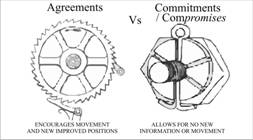
  • Commitment & Compromise

  • Enemy to defy
  • Rules of golf and road
  • Rules too hard
  • Parallel talking
  • Agree on agreements

3. Prepare for the Failure

  • Negativity of this
  • Grow apart
  • Fear of failure
  • Preventative maintenance
  • Phase transitions

4. Complain responsibly

  • What is a complaint
  • The most obvious lost
  • Go directly to the source
  • If you lose it we’ve lost it

5. Six Rules of Engagement

  • Speaking
  • Responding
  • Moderator a counterbalance

6. Conversations and Conversions

  • Conversing lost treasure
  • From the start
  • Conversations build upon agreements
  • Converting our own concepts
  • Creativity on steroids a quantum leap
  • Feedback loops
  • Truce

7. The mating cycle (the conversations and dispute)

  • Golden rule
  • Who should initiate
  • Social trend, does the greatest number rule
  • Cause of divorce and marriage
  • Cost of sexual relationships
  • Conclusion – Matrimony, commitment, & compromise
Posted in Agreements | Leave a comment

Whose Child is it?

My comment to Richard Fidler:

Hey Richard, I like your program but was a bit surprised by your intro today. That Tolstoy’s wife, Sonya was "the bearer of HIS children".

Come on! That may have been the case 150 years ago but today surely there is a better way of stating this.

More like "he was the inseminator for HER children and subsequent financial provider. To me, this is how our legal system perceives the male contribution to child birth today, and rightly so, in my view.

They are her children, we (us males) are mere assistants. I do believe that if we changed our language today to suit the true status of male and female in ‘matri-mony" ie "Mother Condition", we would assist in the education of all to adapt to 21st century thinking not 19th century.

Posted in Agreements | Leave a comment

The Agreed Truth Will Set Us Free

I heard a psychologist on Big Ideas on the ABC 24 stating the following:

“People tell the truth to hut others but can also tell the truth to help others”

She reckons we should tell the truth to help someone. But what if the someone does not want to hear the truth and calls us a trouble maker for hurting them with
my truth?

I say we need to first get an agreement upfront from the other as to what they want to hear from me as they may not wish to hear anything that they don’t like and then how are they going to treat me if that is so?

Time to get some agreed rules of engagement, I think.

Posted in Agreements | Leave a comment